

INSIDE THIS EDITION:
- NEW BREAKFAST VENUE A SUCCESS
- TOPICS ABOUT LIFE VERSION TWO by Jessica Siegel
- TAAVON MARTIN VISITS LLC'S THEATER CONVERSATIONS
- SWANSEA PUBLIC LIBRARY AND MARTIN HOUSE PRESENT STEPHEN PULEO, AUTHOR OF AMERICAN TREASURES (Jun 6)
- NARRAGANSETT BAY SYMPHONY COMMUNITY ORCHESTRA (Jun 7)
- THE LONG WALK HOME by Jeanne Medeiros
- CLEANUP AT INDIA POINT PARK
Click on the links to jump to the article.
New Breakfast Venue a Success
Crescent Moon Cafe
520 Main Street, Warren, RI 02885
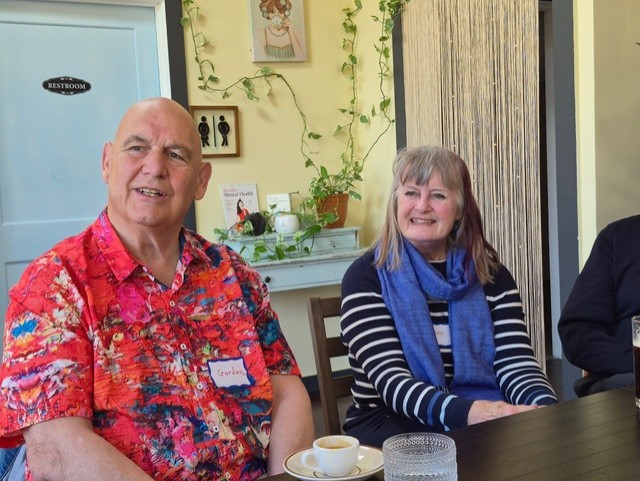
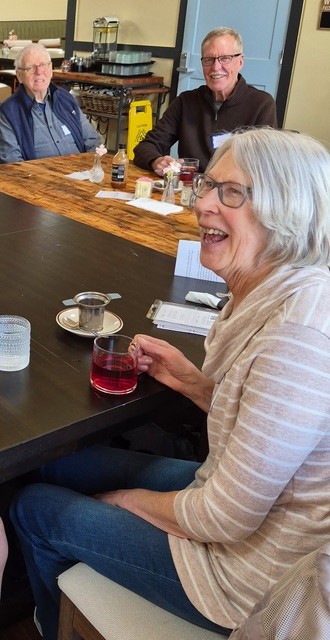
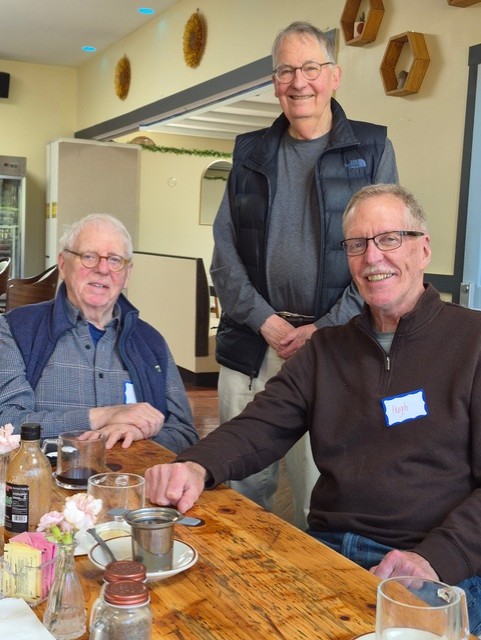
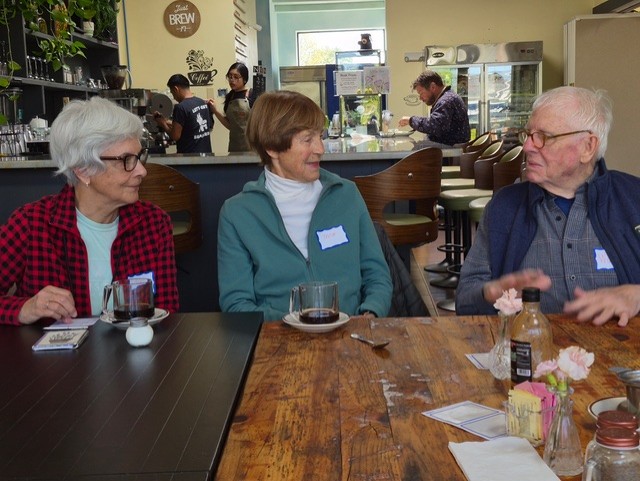
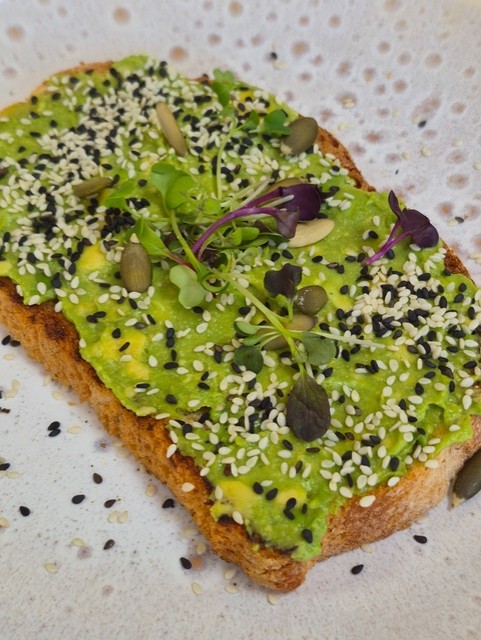
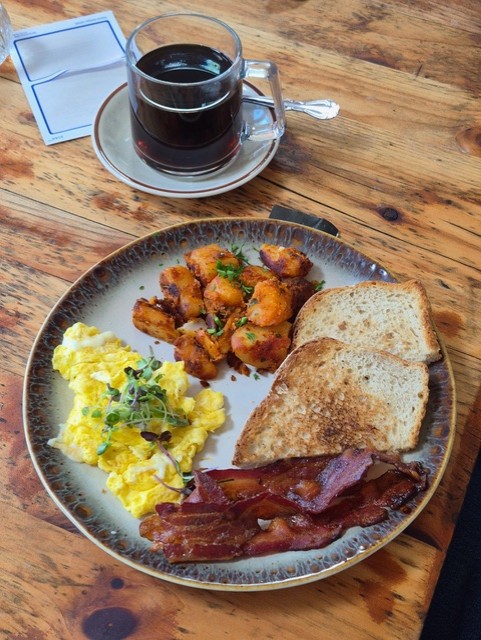
Treats to enjoy!
Photos by Sandy Levis

Topics about Life version two
A Memoir
by Jessica Siegel
The highway blurred into a ribbon of gray as I drove to my memoir class, NPR humming in the background. The interviewee, Brandy Norwood, of Cinderella fame with hit songs in the ’90’s, used a phrase that landed like a seed: “topics about life.” Instantly my head filled with possible chapters, scenes, small epiphanies that could be coaxed into memoir. A few miles later I realized which topic I wanted to be first: last night’s Passover Seder.
Passover is a story about freedom, but more than that it is a yearly ritual that insists we remember, teach, and apply. Growing up in a modest red-brick row home in Northeast Philadelphia, my parents hosted a Seder that felt like a parade. The adults crammed sixteen people around a table for twelve, the kids were banished to a smaller table where we provided a steady soundtrack of interruptions, laughter, complaints, and unwelcome commentary. In my parent’s home, everyone had a place. There was always room for one more. NO need to be Jewish, just come with a healthy appetite and a willingness to try foods known to be an acquired taste like chopped liver and gefilte fish.
Last night, Bob and Lesley’s house felt like that same warm chaos. Their daughters and sons-in-law filled the living room; the air smelled of the sweetness of wine and roasted garlic, matzo crumbs gathered like confetti. The evening’s most tender moment came early, and I still carry it with me: Bob, leaning forward with a stack of colorful cutouts and a small cardboard stage, began to tell Levi the Passover story in a child-friendly way. There was Moses with a felt beard, a Pharaoh with a cardboard crown, frogs made from green paper. Levi, at two and a half, already a cyclone of curiosity, crawled into his grandfather’s lap and went still. For a few minutes, the room hushed around that tableau of three generations: grandfather narrating, toddler absorbing, family watching. You could see the tradition being passed in real time. Simplified, bright, insistently human.
That image reframed everything. The plagues and Exodus can be gruesome when recited in full—rivers turning to blood, swarms of frogs, lice, the death of the firstborn—so we teach them through symbols: parsley for spring, salt water for tears, bitter herbs for the bitterness of oppression, matzo for the haste of escape. At Bob’s table there was a particular tenderness to the ritual—an interleaving of sweetness and sorrow—when someone pressed a spoonful of apples, nits and cinnamon between two pieces of matzo and offered it to the child who still thought the world was a place of bright, knowable things.
Once Levi was safely tucked in and the noise softened, the conversation shifted. We moved from the cardboard characters to the real work of the evening: asking how the story of slavery and liberation speaks to our lives now. It’s easy to assume freedom is only political or physical; the Seder insists otherwise. We spoke of the ways people are enslaved today by habit, by debt, by unexamined traditions, by addictions, and the responsibility to notice and to act. In America, our plight is rarely literal enslavement, yet the rituals pressed me to consider the invisible chains we accept.
There is something radical in that gentle insistence. For one night a year we dramatize suffering, then declare liberation, not as an endpoint, but as a call to vigilance. The Haggadah, that tells the story of Passover, asks us to see ourselves in the story: in every generation a person must regard themselves as having come out of Egypt. That obligation stretches beyond history into ethics. It makes the Seder a workshop for imagination: how do we free ourselves and help free others?
Driving home this morning, Brandy’s phrase kept circling back: topics about life. The Seder—its clumsy cutouts, loud toddlers, earnest debates, and food that tastes of memory—feels like a perfect topic. It contains story, theater, moral inquiry, and a mandate to act. It is, in short, everything a memoir needs: vivid scenes, a cast of characters, and the persistent human question of how we move from bondage to possibility.
If that’s one of my “topics about life,” then last night’s scene of Levi in his Grampa’s lap will be the opening image: a small boy held in rapt attention while an old man hands him a story that will, in time, ask him to notice the world—and maybe, someday, to change it.
© Jessica Siegel
Theater Conversations Class
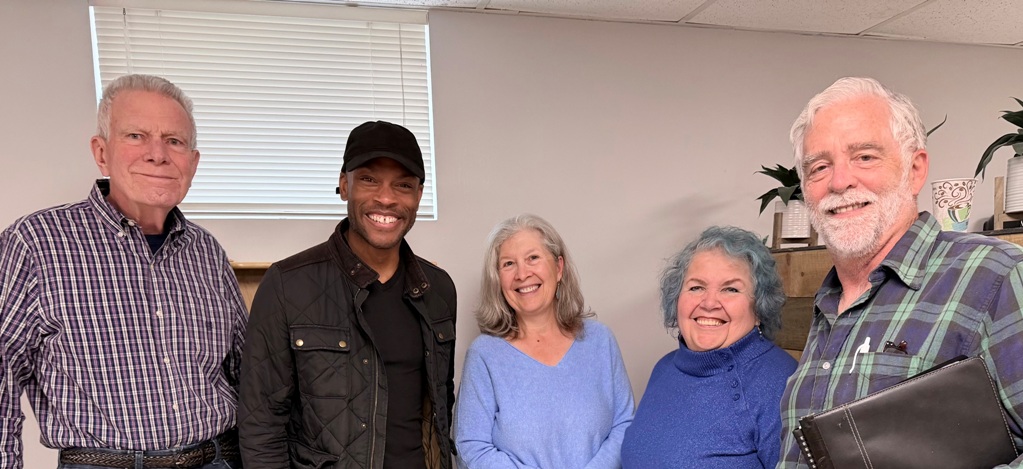
Taavon Martin visited the Theater Conversations class Thursday, May 13 to talk with us about his career and his recent lead role with Trinity Rep as Kenneth in their production of Primary Trust, a Pulitzer Prize winner for Drama. We all enjoyed Tavon’s beautifully nuanced and sweet performance in the show.
Narragansett Bay Symphony Community Orchestra
Season Finale Concert
Sunday, June 7, 2026
3:00 PM
East Providence High School
2000 Pawtucket Avenue, East Providence, RI
Thomas Kociela will be the guest conductor.
Gideon Rubin will be the piano soloist.
PROGRAM
Ode to the Star Spangled Banner by Ferde Grofé
Piano Concerto No. 5 ("Emperor") by Beethoven
Symphony No. 1 by Jean Sibelius
Tickets are "Pay what you think is fair" at the door or in advance at http://www.nabsco.org
For more information visit the website or call (401) 274-4578
The Long Walk Home
A Memoir
by Jeanne Medeiros
I didn’t start crying until I got to the top of Summerfield Street, five houses away from home. It had been a long, scary walk from St. Michael’s church. But it wasn’t until I saw my Aunt Natalie standing in the street looking worried, crying out my name when she saw me, that the tears I had been holding in for almost two miles burst out.
It was April 1963 and I was 7 years old, preparing for my First Communion in May. We had to attend special classes to prepare and the classes were held once a week after school at St. Michael’s. I went to Sacred Hearts school across town, and my parents both worked, so the mother of one of my Sacred Hearts friends drove me to the class every week. When the class ended, the nuns who taught at St. Michael’s would give me a ride home to Summerfield Street, because their convent was just a few blocks away.
My uncle Bert was the pastor of St. Michael’s then, and there were two assistant priests, Father Sobrogio and Father Simoes. Father Sobrogio was from Brazil which meant both his English and his Portuguese were incomprehensible to me. Father Simoes was young and handsome, and would have fallen into the “Father What-a-waste” category if it were not for his hot temper. He was known for red-faced explosions when children couldn’t answer his questions or sang off-key. We all feared him, but, as we later discovered, it was the altar boys who really had the most to fear.
The nuns usually taught our communion class, but on this particular day, Father Simoes was there. We didn’t know it, but there was apparently some nun convention out of town. So we all sat dutifully through the class, praying not to be noticed or asked a question. I remember Father S standing in the aisle of the church and holding a Communion host up for all of us to see, then ripping it to shreds in front of our horrified second-grade eyes, and asking us if he had just committed a mortal sin. Nobody was brave enough to venture an answer, so he yelled at us that it was not a sin because it hadn’t been consecrated yet. If it had been consecrated, it would have been the body and blood of Christ, and he would go to hell for tearing it up, because this was a mortal sin. I have the feeling that priests at that time were not well versed in child psychology or pedagogy.
After we survived the “mortal sin” grilling, we had to practice the songs we would sing in Portuguese at the Communion service. A perennial favorite was this bombastic march entitled, “Queremos Deus”. It was probably a good thing that most of us weren’t fluent in Portuguese, since the words translate as, “Love God, you ungrateful humans, He is your Supreme Father and Redeemer. Only fools mock the faith and rise up against our Lord”. A cheery little tune for us to chirp out in our white dresses and veils under the proud eyes of our families!
When the class mercifully came to an end, I realized that I had no ride home. The nun convention had left me stranded. Apparently, I didn’t have great problem-solving skills, or maybe my brain was so rattled by Father Simoes, but it never occurred to me to go to the rectory next door, where my uncle Bert lived, and ask him for help. The only thing I could think to do was to walk home.
I knew the way well, since we drove back and forth to St. Michael’s a few times every week, so I wasn’t worried about getting lost. I probably should have worried about the fact that I’d be crossing major streets with a lot of traffic, and that I was a vulnerable little girl whose whereabouts would be unknown to her family, but all I worried about were dogs. Back in the early 60s, nobody had the kinds of sweet, member-of-the-family, sleeps-on-the-bed-with-us dogs that everyone seems to have now. Most of the dogs I knew were “outside dogs”, snarling behind chain-link fences and ready to bite.
But I couldn’t think of any other option, so off I went, down Essex Street, then right onto North Main Street. It was 7/10 of a mile to President Avenue, and I knew all the landmarks, – St. Joseph’s church, the North End Cemetery, Rogers Funeral Home, the creepy dentist we went to who didn’t use Novocain, Morton Junior High School, which I’d always heard was full of “tough kids”. So many terrors, but I was on the lookout for nasty dogs.
I had to cross North Main Street, one of the busiest streets in Fall River, to get to President Avenue. President Avenue was always fun to drive up or down because it was seven steep hills, and if the car was going a little too fast, our stomachs would get a little queasy. It was like riding the roller coaster without going to the amusement park. Up I went, past June Street, Rock Street, Belmont Street, Underwood Street, High Street, past North Park, and arriving finally at the top – Highland Avenue. Now I was getting close to home. Right at Hanover Street near Holy Name Church, then flat ground past more familiar houses, past Pearce Street, New Boston Road, Bigelow Street, and finally, Summerfield.
The late afternoon sky was starting to darken when I got to the corner of Hanover and Summerfield and saw my Aunt Natalie. My epic journey was over. It entered family lore. It was sometimes recounted as “Remember when brave little Jeannie walked home from Saint Michael’s when she was only 7 years old?” Or, if my brother was telling it, “Remember when Jeannie was too stupid to go to the rectory and ask Uncle Bert for a ride home?”
Cleanup at India Point Park
April 19, 2026
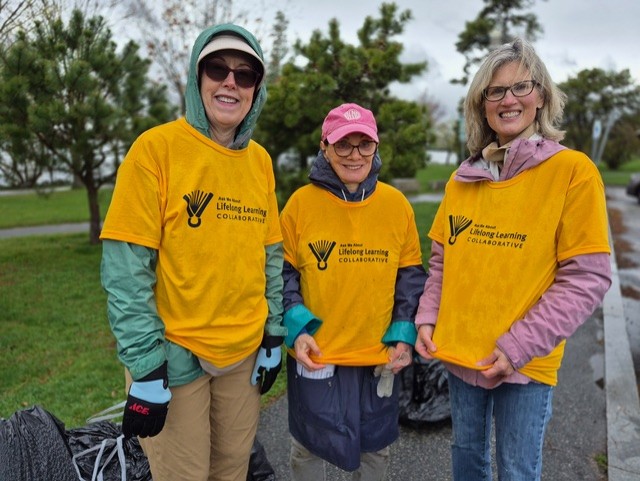
Engagement Committee Chair Kate McGovern and Community Service Leaders Leslie Walden and Sandy Levis show off LLC's bright new t-shirts. People *did* ask about our organization!
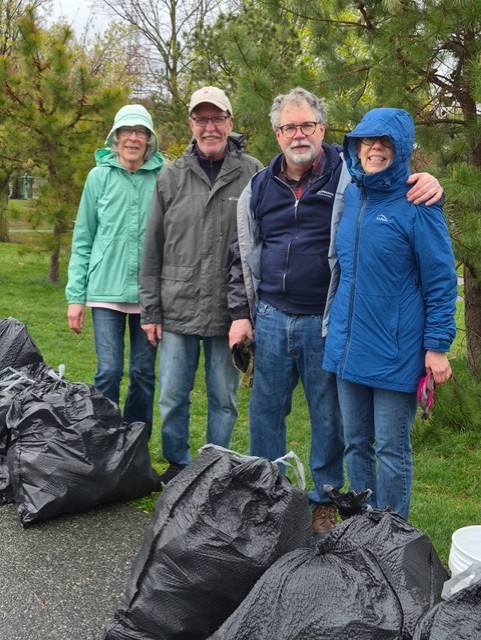
Cheryl & Hugh Campbell and Hugh & Bonnie Gorman pose with the 151 lbs of trash collected at India Point Park.
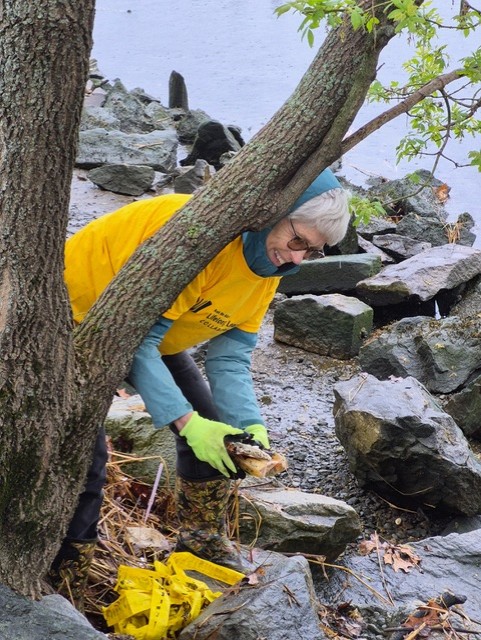
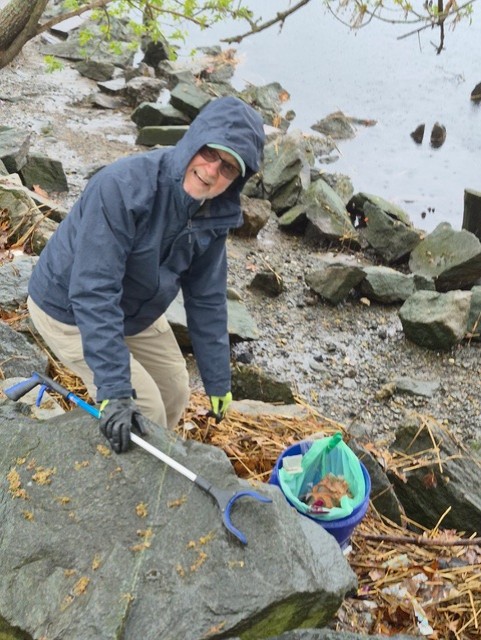
Susan Pitt and her husband Doug braved slippery rocks to retrieve flotsam from the park’s shoreline.
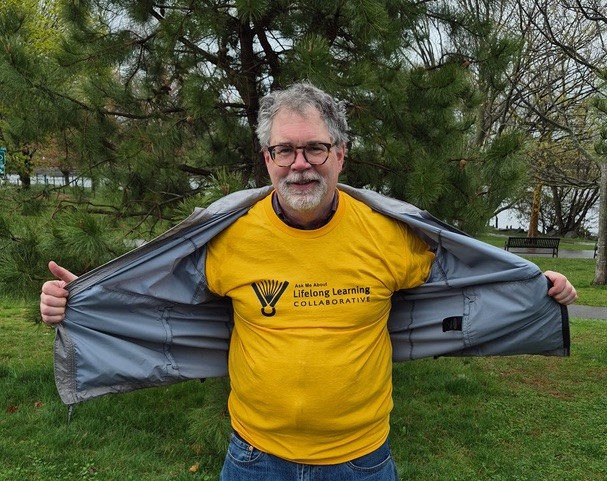
Hugh Gorman strikes a Superman pose to show that volunteers are heroes!